Evolutionary gems — Nature.

Nature recently provided a list of “15 evolutionary gems“.

…the document summarizes 15 lines of evidence from papers published in Nature over the past 10 years. The evidence is drawn from the fossil record, from studies of natural and artificial habitats, and from research on molecular biological processes.

In a year in which Darwin is being celebrated amid uncertainty and hostility about his ideas among citizens, being aware of the cumulatively incontrovertible evidence for those ideas is all the more important. We trust that this document will help.

A bicycle without a wheel.

I won’t get into this in detail, in part because I wrote about it in my paper The evolution of complex organs in the special issue of Evolution: Education and Outreach about eyes.

It seems the most recent analogy drawn by anti-evolutionists to support the idea of irreducible complexity is a bicycle — yeah, a unicycle works but a bicycle missing a wheel doesn’t, therefore it’s irreducibly complex. You can find out more at The Loom, where Carl shows people riding single-wheel bikes.

I am only weighing in because the discussion seems to be overlooking an important point about exaptation/co-option: the function need not be the same in both instances. So, although riding a bike with one wheel the way you would ride a two-wheeled bike a la wheelie is fine to show that it wouldn’t be totally non-functional, an even more relevant counter-example would involve a bicycle with one wheel that worked well for some other role.

Voila.

This is just the first single-wheeled, functional-for-something-different, co-option example I found. This actually involves one shift and one addition of function. Loss of wheel to make it useful for exercise indoors, then addition of other parts to run a laundry machine. Of course, modern stationary bicycles used for exercise are more specialized, but you can still find gear to convert a normal bicycle into a stationary one, sometimes by taking off the front wheel.

So, basically, bicycles with one wheel provide a very nice illustration of how co-option with shift in function can and does work.

The peppered moth.

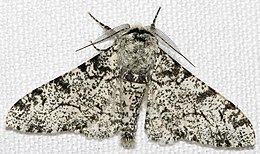
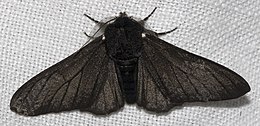
The peppered moth, Biston betularia, has been used as a classic example of natural selection in action. This moth (like many others) includes both light and dark forms that change in frequency under conditions of higher or lower pollution. Anti-evolutionists have challenged this, and unfortunately they gained ammunition in this regard from a book review by Jerry Coyne.


As part of their Top 10 evolution articles, New Scientist provides a story entitled Reclaiming the peppered moth for science.

Bad news, the New Scientist story is subscription only.

Good news, Evolution: Education and Outreach will include a paper about the peppered moth by leading expert Michael Majerus in the next issue, and it’s a) already available in pre-print, and b) free.

While you’re visiting the journal, check out the last issue which is a special volume all about eyes.

Special issue of the Lancet.

From The Evolution & Medicine Review, a notification about the special issue of the Lancet on evolution. (And don’t forget the special issue of E:EO!).

S1
Foreword

Steve Jones

S5
Darwinism’s fantastic voyage

Helena Cronin, Oliver Curry

S11
The Origin of Species

Richard Harries

S14
Art and evolution

Tom Lubbock

S21
Evolution: medicine’s most basic science

Randolph M Nesse

S28
The evolution of fruit-fly biology

Ralph J Greenspan, Martin Kreitman

S34
Socioeconomic inequalities in ageing and health

Robert L Perlman

S40
Forebears and heirs: a sketch

David Sharp

S45
Synthetic biology

Henry Nicholls

S50
Darwin’s charm

Peter Hayward

S57
Bold flights of a speculative mind

Andrew Bell

S68
Darwin and the philosophers

Athar Yawar

S74
Darwin’s writing

Richard Horton

S85
Race, genetics, and medicine at a crossroads

John Hardy

S90
Epigenetics in evolution and disease

Manel Esteller

S97
Antibiotic resistance: adaptive evolution

George PC Salmond, Martin Welch

S104

21st century eugenics?

Nancy E Hansen, Heidi L Janz, Dick J Sobsey

Science as art.

Sometimes while doing science, one is struck by something in the same way that one is affected by beautiful art.

Not that these are the most amazing images ever (they weren’t meant to be artistic, just routine work), but I enjoyed them. They’re from a project on rotifers by one of my undergraduate thesis students. They’re both of Adineta vaga: the first is of the whole animal (the pink spots are the DNA), the second is the musculature on a confocal laser microscope. (Photos by K. Ashforth).

Bonus:

Here are some pictures I took several years ago. A is an ovariole from the ovary of a vinegar fly (Drosophila melanogaster) and B is the same from a flea (Ctenocephalides felis). The huge circles are nurse cells, which are very highly endopolyploid.

Look at it this way…

Todd Oakley reports on a dust-up over at Panda’s Thumb in which a commentator is not convinced that eyes evolved, in large part because the specific details of the early origin of the phototransduction pathway have yet to be worked out. Not surprisingly, responses have pointed out that the gaps are getting smaller and smaller and that a lot is known about how phototransduction may have arisen from precursors in other systems through duplication, co-option, and the various processes discussed in this paper.

I think this debate misses a much larger and more significant point. Darwin suggested that eyes evolved in the Origin, published 150 years ago. This was before even the basics of heredity were generally understood. It was before the discovery of DNA. Before the elucidation of the structure of DNA. Before the rise of molecular biology. Before the advent of phylogenetics. Before evolutionary developmental biology. Before genome sequencing.

And yet, through the emergence of all these major new sources of data, not a single reliable observation in any of these fields has contradicted the general hypothesis that eyes are the product of evolutionary mechanisms. Quite the opposite, as the picture of how this probably occurred in different lineages is become increasingly clear thanks in large part to this rapidly expanding body of knowledge. Gaps remain, of course, which is why it’s an intriguing field of inquiry. But the notion of waiting until every last detail is known before accepting the basic historical reality badly misinterprets the nature of science and scientific evidence.

Calling fellow bloggers!

Calling fellow bio bloggers — help get the word out for the special issue of Evolution: Education and Outreach all about eye evolution. The content is free to access online and the authors include many of the world’s top eye evolution researchers. A handy table of contents with links is provided below for easy copy and paste maneuvers.

Evolution: Education and Outreach
Volume 1 Issue 4

Editorial

351. Editorial by Gregory Eldredge and Niles Eldredge (PDF)

352-354. Introduction by T. Ryan Gregory (PDF)

355-357. Casting an Eye on Complexity by Niles Eldredge (PDF)

Original science / evolution reviews

358-389. The Evolution of Complex Organs by T. Ryan Gregory (PDF)
(Blog: Genomicron)

390-402. Opening the “Black Box”: The Genetic and Biochemical Basis of Eye Evolution by Todd H. Oakley and M. Sabrina Pankey (PDF)
(Blog: Evolutionary Novelties)

403-414. A Genetic Perspective on Eye Evolution: Gene Sharing, Convergence and Parallelism by Joram Piatigorsky (PDF)

415-426. The Origin of the Vertebrate Eye by Trevor D. Lamb, Edward N. Pugh, Jr., and Shaun P. Collin (PDF)

427-438. Early Evolution of the Vertebrate Eye—Fossil Evidence by Gavin C. Young (PDF)

439-447. Charting Evolution’s Trajectory: Using Molluscan Eye Diversity to Understand Parallel and Convergent Evolution by Jeanne M. Serb and Douglas J. Eernisse (PDF)

448-462. Evolution of Insect Eyes: Tales of Ancient Heritage, Deconstruction, Reconstruction, Remodeling, and Recycling by Elke Buschbeck and Markus Friedrich (PDF)

463-475. Exceptional Variation on a Common Theme: The Evolution of Crustacean Compound Eyes by Thomas W. Cronin and Megan L. Porter (PDF)

476-486. The Causes and Consequences of Color Vision by Ellen J. Gerl and Molly R. Morris (PDF)

487-492. The Evolution of Extraordinary Eyes: The Cases of Flatfishes and Stalk-eyed Flies by Carl Zimmer (PDF)
(Blog: The Loom)

493-497. Suboptimal Optics: Vision Problems as Scars of Evolutionary History by Steven Novella (PDF)
(Blog: NeuroLogica)

Curriculum articles

498-504. Bringing Homologies Into Focus by Anastasia Thanukos (PDF)
(Website: Understanding Evolution)

505-508. Misconceptions About the Evolution of Complexity by Andrew J. Petto and Louise S. Mead (PDF)
(Website: NCSE)

509-516. Losing Sight of Regressive Evolution by Monika Espinasa and Luis Espinasa (PDF)

Book reviews

548-551. Jay Hosler, An Evolutionary Novelty: Optical Allusions by Todd H. Oakley (PDF)

All about eye evolution.

The most recent issue of Evolution: Education and Outreach is now available free online. This is a special issue devoted to the evolution of eyes. Enjoy.

Evolution: Education and Outreach
Volume 1 Issue 4
The evolution of eyes
Edited by T. Ryan Gregory

Editorial

351. Editorial by Gregory Eldredge and Niles Eldredge (PDF)

352-354. Introduction by T. Ryan Gregory (PDF)

355-357. Casting an Eye on Complexity by Niles Eldredge (PDF)

Original science / evolution reviews

358-389. The Evolution of Complex Organs by T. Ryan Gregory (PDF)
(Blog: Genomicron)

390-402. Opening the “Black Box”: The Genetic and Biochemical Basis of Eye Evolution by Todd H. Oakley and M. Sabrina Pankey (PDF)
(Blog: Evolutionary Novelties)

403-414. A Genetic Perspective on Eye Evolution: Gene Sharing, Convergence and Parallelism by Joram Piatigorsky (PDF)

415-426. The Origin of the Vertebrate Eye by Trevor D. Lamb, Edward N. Pugh, Jr., and Shaun P. Collin (PDF)

427-438. Early Evolution of the Vertebrate Eye—Fossil Evidence by Gavin C. Young (PDF)

439-447. Charting Evolution’s Trajectory: Using Molluscan Eye Diversity to Understand Parallel and Convergent Evolution by Jeanne M. Serb and Douglas J. Eernisse (PDF)

448-462. Evolution of Insect Eyes: Tales of Ancient Heritage, Deconstruction, Reconstruction, Remodeling, and Recycling by Elke Buschbeck and Markus Friedrich (PDF)

463-475. Exceptional Variation on a Common Theme: The Evolution of Crustacean Compound Eyes by Thomas W. Cronin and Megan L. Porter (PDF)

476-486. The Causes and Consequences of Color Vision by Ellen J. Gerl and Molly R. Morris (PDF)

487-492. The Evolution of Extraordinary Eyes: The Cases of Flatfishes and Stalk-eyed Flies by Carl Zimmer (PDF)
(Blog: The Loom)

493-497. Suboptimal Optics: Vision Problems as Scars of Evolutionary History by Steven Novella (PDF)
(Blog: NeuroLogica)

Curriculum articles

498-504. Bringing Homologies Into Focus by Anastasia Thanukos (PDF)
(Website: Understanding Evolution)

505-508. Misconceptions About the Evolution of Complexity by Andrew J. Petto and Louise S. Mead (PDF)
(Website: NCSE)

509-516. Losing Sight of Regressive Evolution by Monika Espinasa and Luis Espinasa (PDF)

Book reviews

548-551. Jay Hosler, An Evolutionary Novelty: Optical Allusions by Todd H. Oakley (PDF)